The TaylorMade SIM2 Max irons remain one of the most popular game-improvement iron sets even years after their release. Designed to blend distance, forgiveness and a smoother feel, the SIM2 Max irons are still a go-to choice for golfers seeking higher launch and easier ball-striking. In this review we’ll examine the tech, performance, who they suit, fitting tips, and whether buying SIM2 Max in 2025 is a smart move.
1. Overview
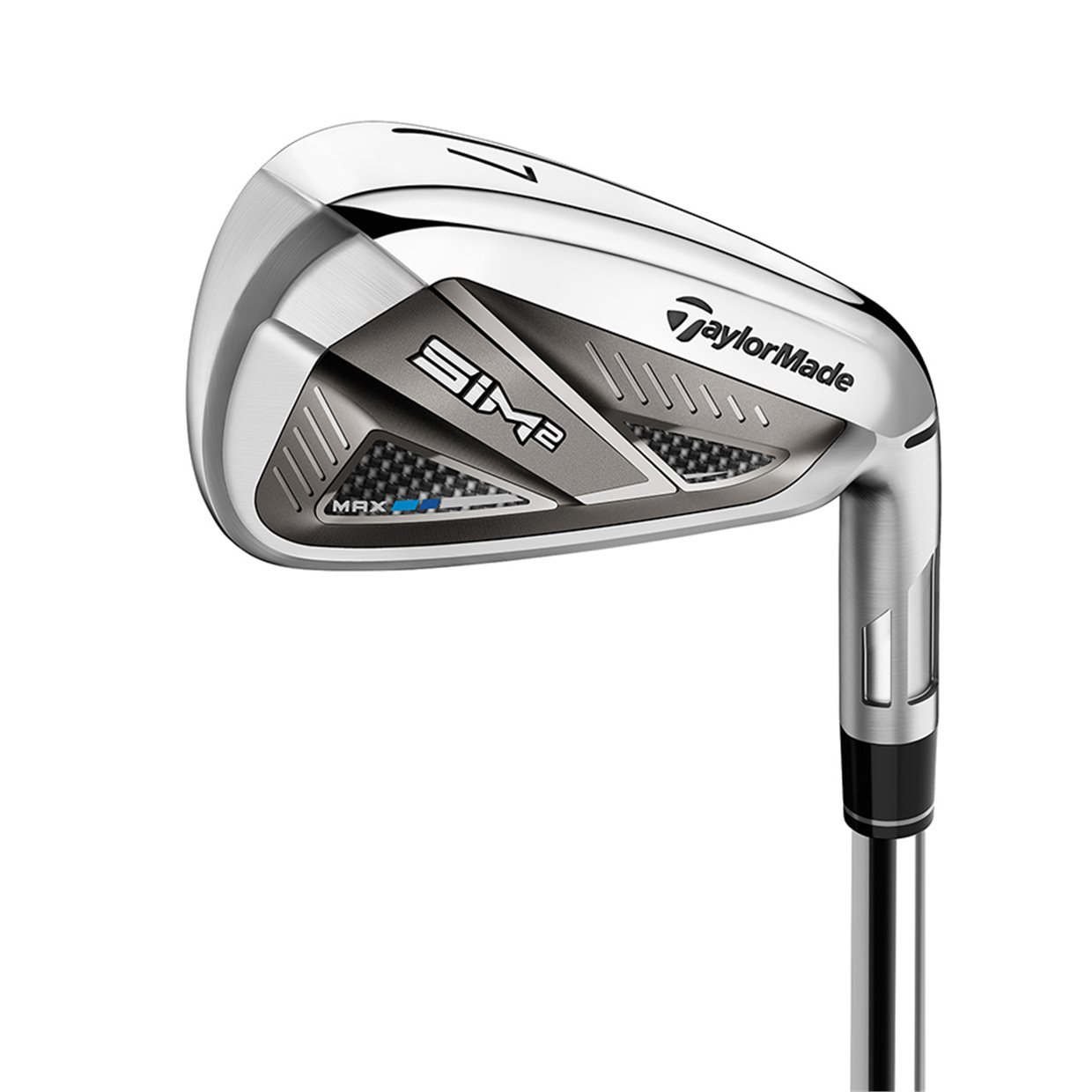
Built around TaylorMade’s multi-material engineering, the SIM2 Max irons focus on making golf easier for the average player. They were engineered to maximize ball speed, raise launch, and preserve distance on off-center hits. The set combines a low CG, a speed pocket for low-face strikes, and internal damping to deliver a polished feel that belies the game-improvement profile.
2. Key Technology & Design Features
- Cap Back Design: A polymer-steel cap wraps the top of the cavity to stiffen the topline, allowing mass to move low and back for higher launch and forgiveness.
- Thru-Slot Speed Pocket: Preserves ball speed on low-face strikes so thin shots still carry.
- ECHO Damping System: Internal polymer dampers touch multiple internal points to reduce vibrations and create a smoother, forged-like feel.
- Variable Face Thickness & ICT: Inverted cone / face tuning shifts sweet spots by iron to optimize speed and forgiveness across the set.
- Low CG Packaging: Fluted hosel and undercut cavity lower CG for easier launch with modern lofts.
3. Performance & Feel
Distance & Forgiveness: SIM2 Max irons consistently show strong ball speeds and retained carry on mishits thanks to the Speed Pocket and Cap Back construction. Many golfers report gaining roughly a club of distance versus older cavity-backs while enjoying a much larger effective sweet spot.
Trajectory & Spin: Expect a mid-to-high launch and mid spin rates. The low CG encourages a climbing trajectory, which is helpful for players who struggle to get the ball airborne with longer irons.
Sound & Impact Feedback: The ECHO system tempers unpleasant vibration, producing a clean, solid "crack" on center strikes and forgiving feedback on thin hits. While not as buttery as forged blades, the SIM2 Max feel is notably refined for a game-improvement iron.
4. Pros & Cons (Quick Summary)
Pros
- Very forgiving across the face
- Excellent distance for a GI iron
- High launch and usable carry even on thin strikes
- Improved feel with ECHO damping
- Durable construction & good resale value
Cons
- Limited workability for serious shot-shapers
- Larger profile may not appeal to traditionalists
- Stronger lofts may require gapping adjustments
- Not a substitute for a forged player's iron on feel
5. Who Should Play SIM2 Max?
Ideal candidates:
- Mid- to high-handicap golfers (10–30+) wanting more distance and forgiveness.
- Players who miss the center of the face often and need a larger sweet spot.
- Golfers seeking higher launch without radically changing swing mechanics.
- Returning players upgrading older irons who want immediate performance gains.
Less ideal: Low handicap players and those who prioritize extreme workability or a forged feel. If you shape shots regularly or prefer compact head shapes, consider a players-distance or players iron instead.
6. Fitting Tips & Gapping Strategy
- Set makeup: Standard 5–PW is common, but consider adding a hybrid or strong long iron for playable gapping in the 4/5-iron slots.
- Loft checks: SIM2 Max uses modern (stronger) lofts—verify your gapping to your wedges during fitting.
- Shaft choice: SIM2 Max is offered with multiple shaft options. Mid-speed swingers may prefer graphite in the long irons, while stronger players might choose a steel shaft for tighter dispersion.
- Lie & grip: Ensure lie angles are tailored; the forgiving head can hide poor lie angles if unchecked.
7. Value, Durability & Longevity
SIM2 Max irons hold up well over time. The multi-material construction and high-strength face are durable, and the set often provides outstanding value on the secondary market in 2025. For many golfers, buying a lightly used SIM2 Max set yields modern tech at a steep discount versus brand-new models.
8. How SIM2 Max Compares to Newer Models
While newer models (like TaylorMade’s later lines and competitors’ recent GI offerings) have refined certain elements, SIM2 Max remains competitive thanks to its combination of launch, stability, and feel. In many head-to-head tests for mid-speed players, SIM2 Max still performs similarly to newer releases in carry and forgiveness—often at a better price point.
9. Final Thoughts
The TaylorMade SIM2 Max irons are still an excellent choice in 2025 for golfers who want forgiveness, distance, and a comfortable feel without sacrificing playability. They are especially compelling for mid- to high-handicap players and anyone who wants a forgiving long game. If you prioritize shot-shaping or extremely refined forged feel, consider a players' iron — but for the vast majority of golfers, SIM2 Max offers performance and value that remain hard to beat.
Sources
- TaylorMade. SIM2 Max Product Information (2021–2025). taylormadegolf.com
- ProGolfPicks. SIM2 Max Review (2024–2025). progolfpicks.com
- Golf Monthly. SIM2 Max Irons Review. golfmonthly.com
- GolfClubGuru. SIM2 Max Review. golfclubguru.com